Publication details
Wu H, Guang X, Al-Fageeh MB, Cao J, Pan S, Zhou H, Zhang L, Abutarboush MH, Xing Y, Xie Z, Alshanqeeti AS, Zhang Y, Yao Q, Al-Shomrani BM, Zhang D, Li J, Manee MM, Yang Z, Yang L, Liu Y, Zhang J, Altammami MA, Wang S, Yu L, Zhang W, Liu S, Ba L, Liu C, Yang X, Meng F, Wang S, Li L, Li E, Li X, Wu K, Zhang S, Wang J, Yin Y, Yang H, Al-Swailem AM, Wang J
Abstract: Bactrian camel (Camelus bactrianus), dromedary (Camelus dromedarius) and alpaca (Vicugna pacos) are economically important livestock. Although the Bactrian camel and dromedary are large, typically arid-desert-adapted mammals, alpacas are adapted to plateaus. Here we present high-quality genome sequences of these three species. Our analysis reveals the demographic history of these species since the Tortonian Stage of the Miocene and uncovers a striking correlation between large fluctuations in population size and geological time boundaries. Comparative genomic analysis reveals complex features related to desert adaptations, including fat and water metabolism, stress responses to heat, aridity, intense ultraviolet radiation and choking dust. Transcriptomic analysis of Bactrian camels further reveals unique osmoregulation, osmoprotection and compensatory mechanisms for water reservation underpinned by high blood glucose levels. We hypothesize that these physiological mechanisms represent kidney evolutionary adaptations to the desert environment. This study advances our understanding of camelid evolution and the adaptation of camels to arid-desert environments.
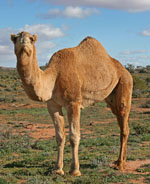
[ Opisthokonta | Metazoa | Eumetazoa | . . .
. . . | Tylopoda | Camelidae | Camelus ]
 Picture Source
|
| Taxonomy: | Eukaryota | Opisthokonta | Metazoa | Eumetazoa | Bilateria | Deuterostomia | Chordata | Craniata | Vertebrata | Gnathostomata | Teleostomi | Euteleostomi | Sarcopterygii | Dipnotetrapodomorpha | Tetrapoda | Amniota | Mammalia | Theria | Eutheria | Boreoeutheria | Laurasiatheria | Cetartiodactyla | Tylopoda | Camelidae | Camelus |
| Common: | one-humped camel, dromedary, dromedaries, camel(German: Dromedar, Einhöckriges -/Arabisches Kamel ) |
|
|

|
Go to NCBI Taxonomy (9838) |
|
|
|  |
Encyclopedia of life |
|
|  |
Wikipedia |
| Projects: |
|
 |
|

|
National Center for Biotechnology Information: NCBI Eukaryotic Genomes Project
|
|
|
|
| Publication: |
Wu H, Guang X, Al-Fageeh MB et. al. 
( 2014)
Nat Commun 5, 5188.

|
|
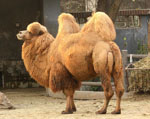
[ Opisthokonta | Metazoa | Eumetazoa | . . .
. . . | Tylopoda | Camelidae | Camelus ]
 Picture Source
|
| Taxonomy: | Eukaryota | Opisthokonta | Metazoa | Eumetazoa | Bilateria | Deuterostomia | Chordata | Craniata | Vertebrata | Gnathostomata | Teleostomi | Euteleostomi | Sarcopterygii | Dipnotetrapodomorpha | Tetrapoda | Amniota | Mammalia | Theria | Eutheria | Boreoeutheria | Laurasiatheria | Cetartiodactyla | Tylopoda | Camelidae | Camelus |
| Common: | two-humped camel, domestic Bactrian camel, camel (German: Trampeltier, Zweihöckriges, Baktrisches Kamel) |
|
|
|
Go to NCBI Taxonomy (9837) |
|
|
| |
Encyclopedia of life |
|
| |
Wikipedia |
| Publications: |
Burger PA, Palmieri N
(2014)
J Hered 105, 839-846.
Wu H, Guang X, Al-Fageeh MB et. al.
( 2014)
Nat Commun 5, 5188.
|
|
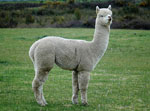
[ Opisthokonta | Metazoa | Eumetazoa | . . .
. . . | Camelidae | Vicugna | Vicugna pacos ]
 Picture Source
|
| Taxonomy: | Eukaryota | Opisthokonta | Metazoa | Eumetazoa | Bilateria | Deuterostomia | Chordata | Craniata | Vertebrata | Gnathostomata | Teleostomi | Euteleostomi | Sarcopterygii | Dipnotetrapodomorpha | Tetrapoda | Amniota | Mammalia | Theria | Eutheria | Boreoeutheria | Laurasiatheria | Cetartiodactyla | Tylopoda | Camelidae | Vicugna | Vicugna pacos |
| Synonym: | Lama pacos huacaya |
|
|
|
Go to NCBI Taxonomy (273913) |
|
|
| |
Encyclopedia of life |
|
| |
Wikipedia |
| Publication: |
Wu H, Guang X, Al-Fageeh MB et. al.
( 2014)
Nat Commun 5, 5188.
|
|